
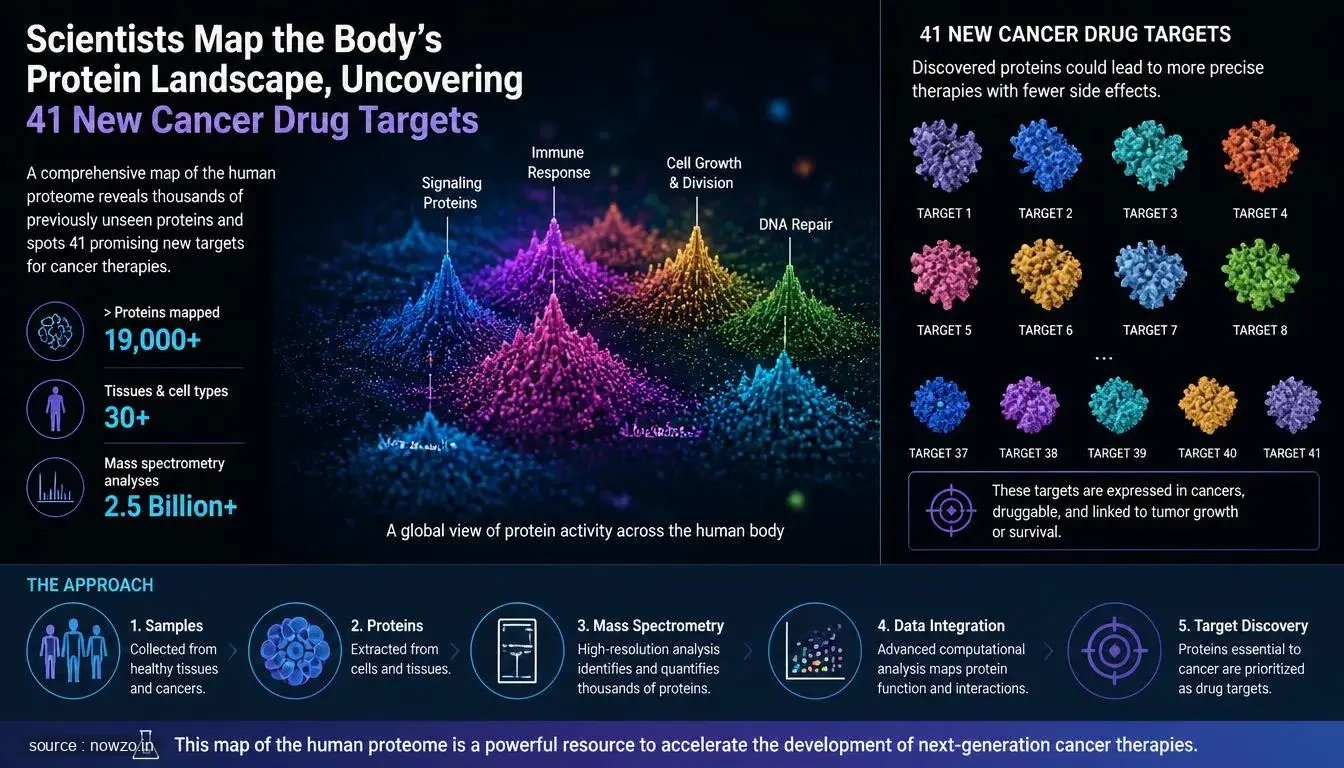
In a leap forward for precision medicine, scientists have mapped the intricate landscape of human proteins, uncovering 41 promising new targets for cancer drugs. This whole-body proteome atlas doesn't just list proteins—it reveals how they dance across our tissues, pointing researchers toward vulnerabilities in cancer cells that were once hidden in plain sight.
Key facts
- 41 potential new cancer drug targets identified
- Atlas maps protein expression across human tissues
- Findings could accelerate development of targeted therapies
Why This Atlas Matters
For decades, cancer drug development has often felt like searching for keys in a dark room. This new proteome atlas turns on the lights. By showing exactly where and how proteins express themselves throughout the body, researchers can now spot the unique signatures that cancer cells rely on to survive—and then design drugs to disrupt them.
The Hunt for Better Treatments
What makes these 41 targets particularly exciting is their potential specificity. Unlike traditional chemotherapy that affects both healthy and cancerous cells, drugs aimed at these newly identified proteins could zero in on cancer with far fewer side effects. It's the difference between a scattergun and a sniper rifle.
What Comes Next
The real work begins now. Pharmaceutical researchers will likely swarm these findings, testing which of these 41 targets respond best to drug compounds. Some will undoubtedly dead-end, as is the nature of drug discovery. But even a handful of successful candidates could mean new hope for patients running out of options.




Comments