
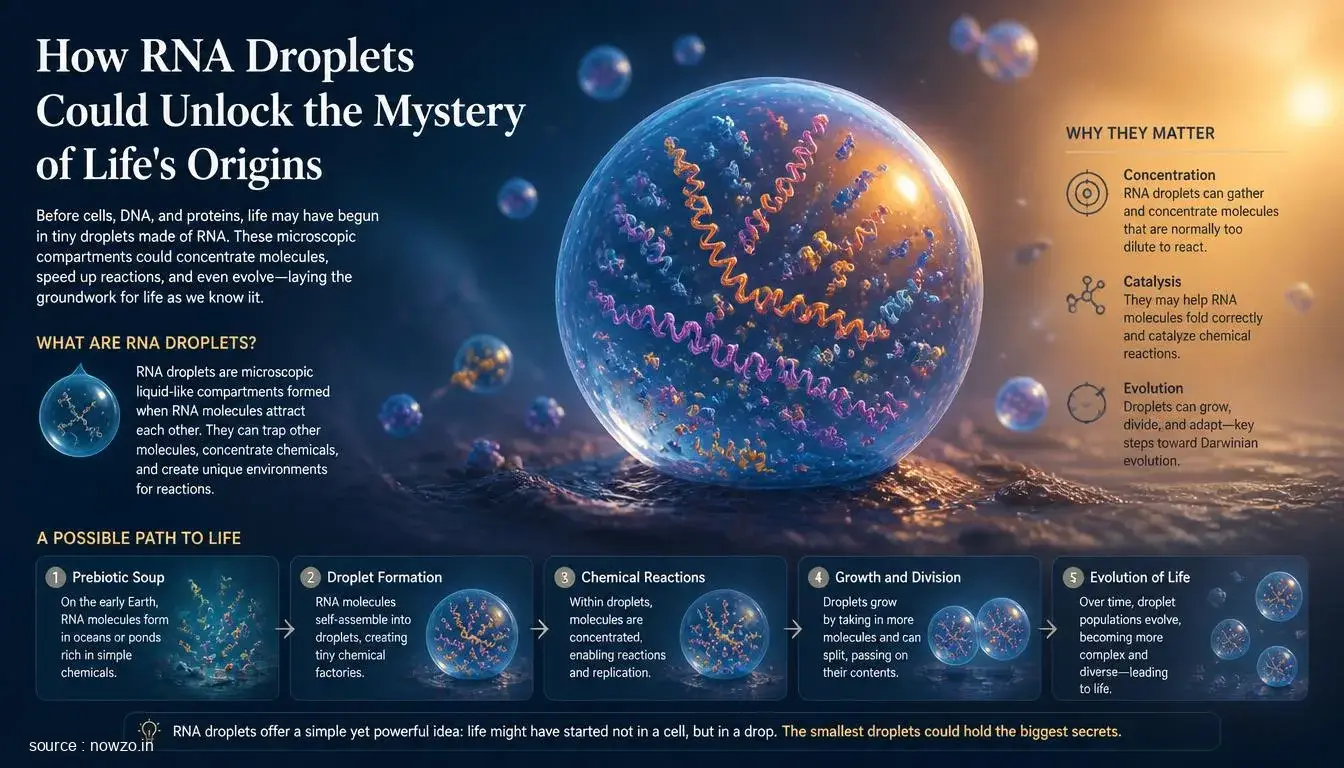
Imagine a warm, shallow pond billions of years ago—not just water, but a simmering molecular soup. Within it, tiny droplets begin to form, concentrating the building blocks of life. It’s a scene scientists have long imagined, and now, new research on RNA condensates is bringing us closer to understanding how life might have first organized itself.
Key facts
- RNA molecules can form liquid-like droplets called condensates.
- These structures may have played a role in early biochemical organization.
- The study provides insight into non-membrane-bound compartments in prebiotic environments.
The Dance of Molecules
RNA, often seen as DNA’s less famous cousin, has a hidden talent: under the right conditions, it doesn’t just float around—it clumps together into dynamic, liquid droplets. These aren’t static blobs; they’re lively, shifting pockets where molecules can interact, react, and perhaps even evolve.
A Window to the Past
What’s thrilling researchers is how these condensates might mirror the conditions of early Earth. Before cells with membranes existed, something had to bring molecules together to kickstart life’s chemistry. These RNA droplets could have been that ‘something’—natural, spontaneous incubators where life’s earliest reactions took shape.
Why It Matters Now
This isn’t just about looking backward. Understanding how life might have assembled itself from simple components fuels both curiosity and innovation. It hints at how biological organization emerges from chaos, a question that resonates in fields from synthetic biology to medicine.






Comments