
Rohan Naidu’s journey into astronomy began with a decisive turn away from engineering at 18. Now an MIT astronomer, he is helping scientists probe one of the deepest mysteries in astrophysics: how the universe’s earliest black holes formed.
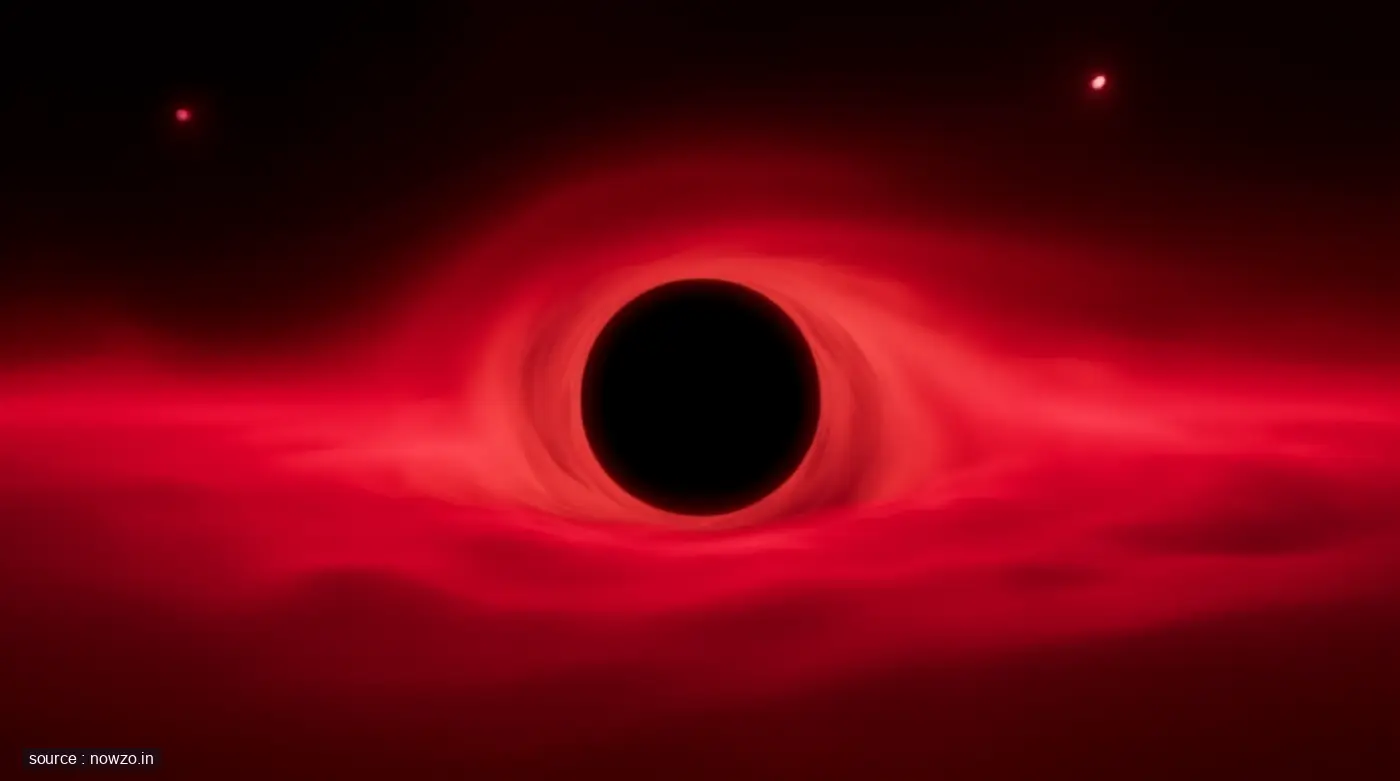
That question has taken on new urgency with the discovery of an unusual object described as a “black hole star” — a gas-enshrouded and gas-reddened black hole seen at cosmic dawn. The finding, reported in Nature and covered by outlets including Phys.org, Open Magazine, The Hindu, and the Times of India, points to a brand-new type of astrophysical object and offers a fresh clue about the early universe.
A discovery at cosmic dawn
The object stands out because it is wrapped in gas and appears reddened by that material, giving it an unusual signature compared with more familiar black hole sightings. Astronomers say it presents a dusty mystery, one that could reshape how they understand black holes in the universe’s infancy.
The phrase “black hole star” reflects the object’s strange appearance: a black hole hidden within a thick gaseous envelope, glowing in a way that can resemble a star while behaving very differently underneath. For researchers, that combination is exactly what makes it so compelling.
Rohan Naidu’s unlikely path
Naidu’s story adds a human dimension to the science. According to the reports, he left engineering at 18 and eventually found his way to MIT, where he now works on questions tied to the earliest structures in the cosmos. His trajectory underscores how nonlinear the path into frontier science can be.
That background matters because the discovery itself sits at the intersection of observation, theory, and interpretation. Identifying a new kind of object at cosmic dawn requires not just data, but the ability to recognize when the universe is showing scientists something they have not seen before.
Why the ‘black hole star’ matters
The early universe remains one of the hardest frontiers in astronomy. Objects from that era are distant, faint, and often obscured, which makes every new detection valuable. A gas-reddened black hole from that period could help explain how black holes grew so quickly and how they interacted with the matter around them.
It also raises new questions. If such objects existed at cosmic dawn, astronomers may need to rethink how common they were, how they formed, and how they fit into the broader story of galaxy and black hole evolution.
A new clue in an old mystery
For now, the “black hole star” is less a final answer than a powerful new lead. It gives scientists a rare observational target from the universe’s earliest era and a reason to keep pushing deeper into the cosmic past.
For Naidu, it is also a striking marker of how far that early decision to leave engineering has carried him — from a teenager changing course to an astronomer helping uncover how the first black holes may have emerged.





Comments