
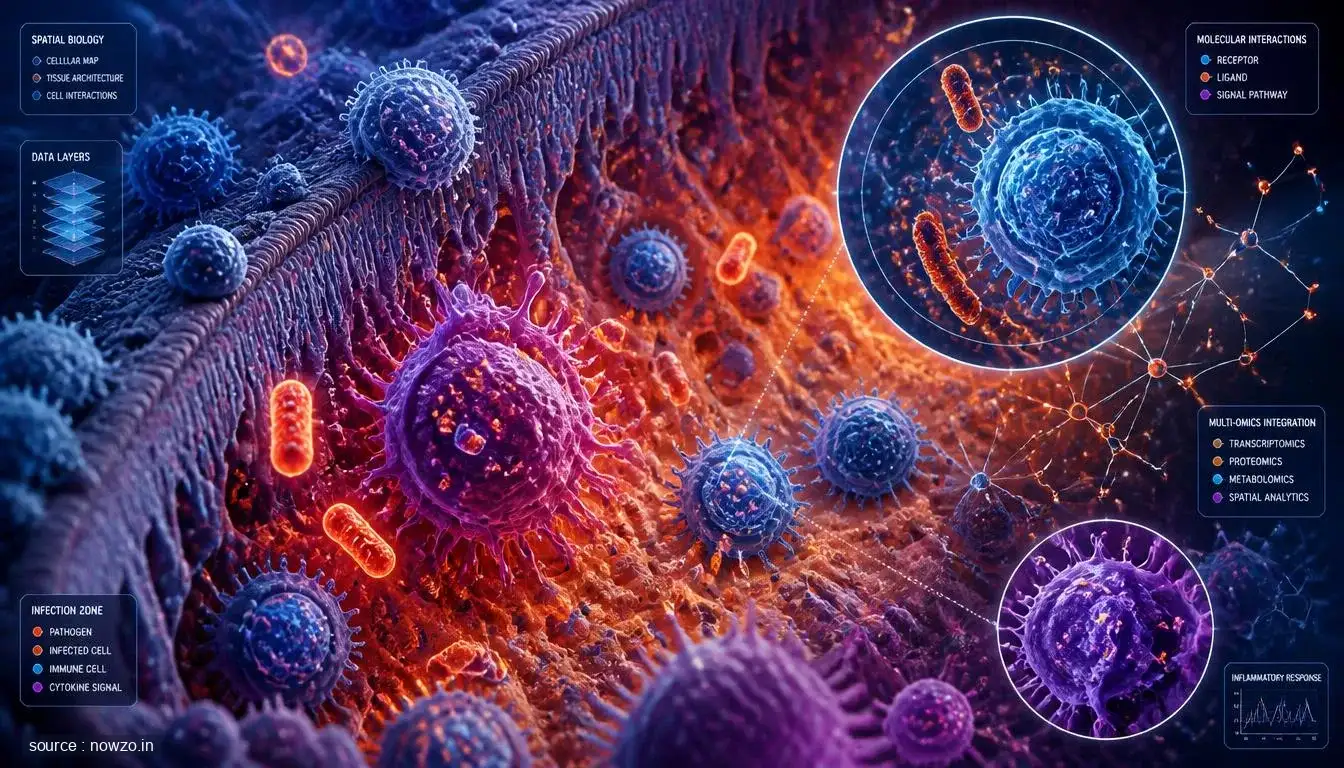
Spatial biology is rapidly gaining recognition as a transformative approach in the study of infectious diseases and a range of emerging scientific fields. By enabling researchers to map the precise location of molecules, cells, and pathogens within tissue samples, this technology is reshaping how scientists understand disease mechanisms at a fundamental level.
What Is Spatial Biology?
Spatial biology refers to a set of advanced techniques that allow scientists to visualize and analyze biological molecules within their native tissue context. Unlike traditional methods that require samples to be homogenized, spatial biology preserves the structural organization of tissues, providing critical context about how cells interact with one another and with invading pathogens.
Applications in Infectious Disease Research
In the field of infectious disease, spatial biology is proving to be a valuable tool for understanding how viruses, bacteria, and other pathogens behave within host tissues. Researchers can now observe where infections take hold, how immune cells respond, and how diseases progress over time — all within the natural architecture of the tissue.
This level of detail is helping scientists identify new therapeutic targets and better understand the complex interplay between pathogens and the human immune system.
Emerging Fields and Future Directions
Beyond infectious disease, spatial biology is finding applications in a growing number of emerging fields. From oncology to neuroscience, the ability to study biological processes in their spatial context is opening new avenues for discovery and innovation.
As the technology continues to evolve, experts anticipate that spatial biology will play an increasingly central role in both basic research and clinical applications, driving advances in diagnostics, drug development, and personalized medicine.





Comments