
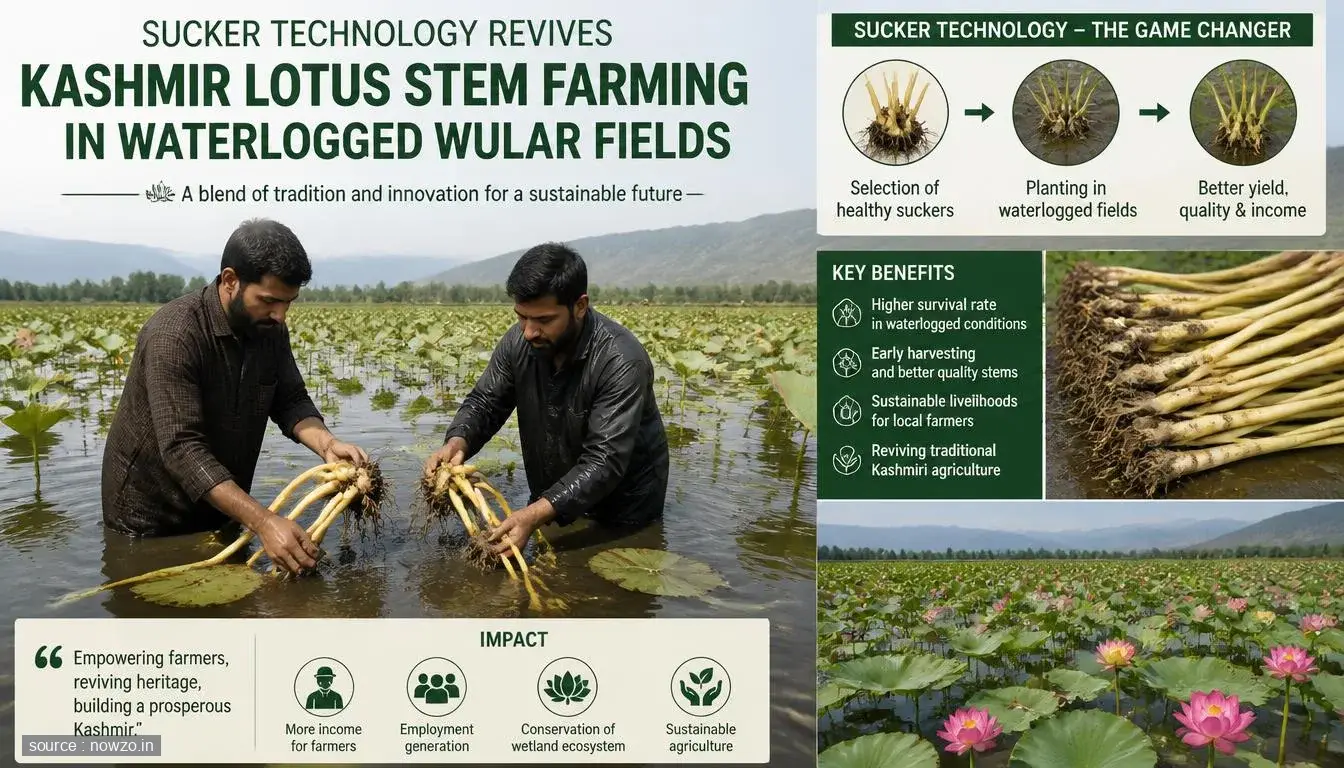
Farmers in the waterlogged fields surrounding Kashmir's Wular Lake are embracing a new agricultural approach, as sucker technology enables large-scale lotus stem cultivation in areas where traditional rice farming has long struggled.
Key Facts
- Sucker technology is being used to boost lotus stem farming in Kashmir.
- The innovation is replacing rice cultivation in waterlogged fields around Wular Lake.
- Lotus stem, locally known as nadru, is a prized ingredient in Kashmiri cuisine.
A Shift Away from Rice
For years, farmers in the Wular Lake belt have contended with chronically waterlogged fields that made conventional paddy cultivation increasingly unviable. The introduction of sucker technology has opened a practical alternative, allowing growers to propagate lotus plants efficiently in these saturated conditions.
How the Technology Helps
The technique uses lotus suckers — the underground runners of the plant — to establish new crops more reliably and at greater scale. This method suits the unique wetland ecology of the Wular region, turning what was once considered unproductive land into fertile ground for nadru cultivation.
Economic Promise for the Region
Lotus stem holds strong demand in local markets, where it features prominently in traditional Kashmiri dishes. The transition from rice to nadru farming is expected to improve livelihoods for communities around the lake, offering a crop better suited to the landscape and its water-rich environment.






Comments