
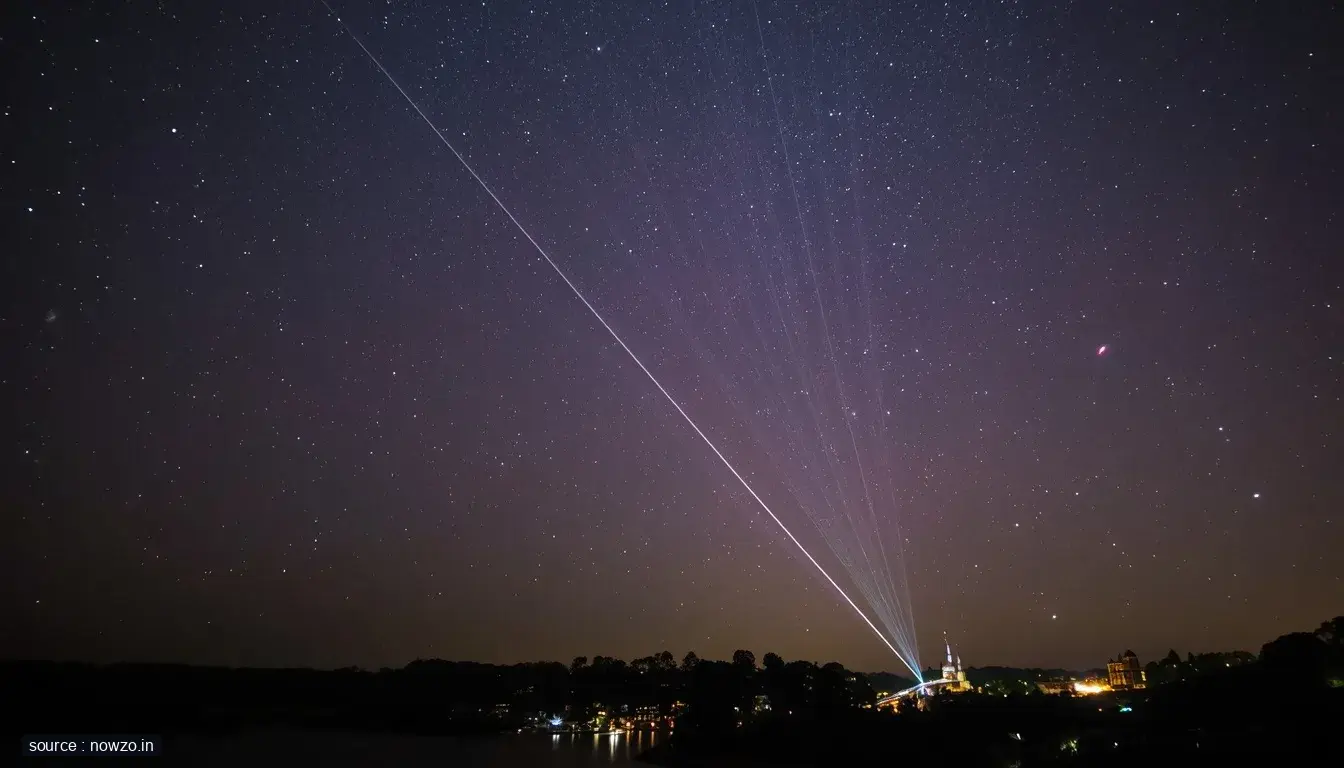
In a breakthrough that reads like cosmic poetry, a University of Sydney PhD student has pinpointed the source of a mesmerizing radio rhythm pulsing through the Milky Way. Every 1.34497 hours, like clockwork, a dead star and its companion unleash a powerful radio signal—offering astronomers their clearest glimpse yet into one of space’s enduring mysteries.
Key facts
- A dead star strips material from its companion in a tight 1.4-hour orbit
- Radio pulses occur precisely every 1.34497 hours
- Discovered by a University of Sydney PhD student earlier in 2026
A Cosmic Rosetta Stone
For years, unexplained radio bursts have teased scientists from across the galaxy. Now, this synchronized stellar duo acts as a decoder ring—a “Rosetta Stone” in space—revealing how gravitational interplay between stars can generate such intense emissions. The mechanism echoes how Jupiter’s moon Io interacts with its giant planet, but on a stellar scale.
Why This Discovery Matters
This isn’t just another celestial curiosity. By tracing the radio pulse to its source, researchers can finally model what drives at least some of these energetic cosmic signals. It’s a rare, clean laboratory millions of light-years away, giving astrophysicists a template to understand similar phenomena throughout the universe.
Looking Ahead
The find, confirmed with help from a UWM astronomer, opens new observational pathways. With a known rhythm and a confirmed mechanism, telescopes worldwide can now tune in—literally—to similar systems, turning what was once noise into meaningful data.






Comments