
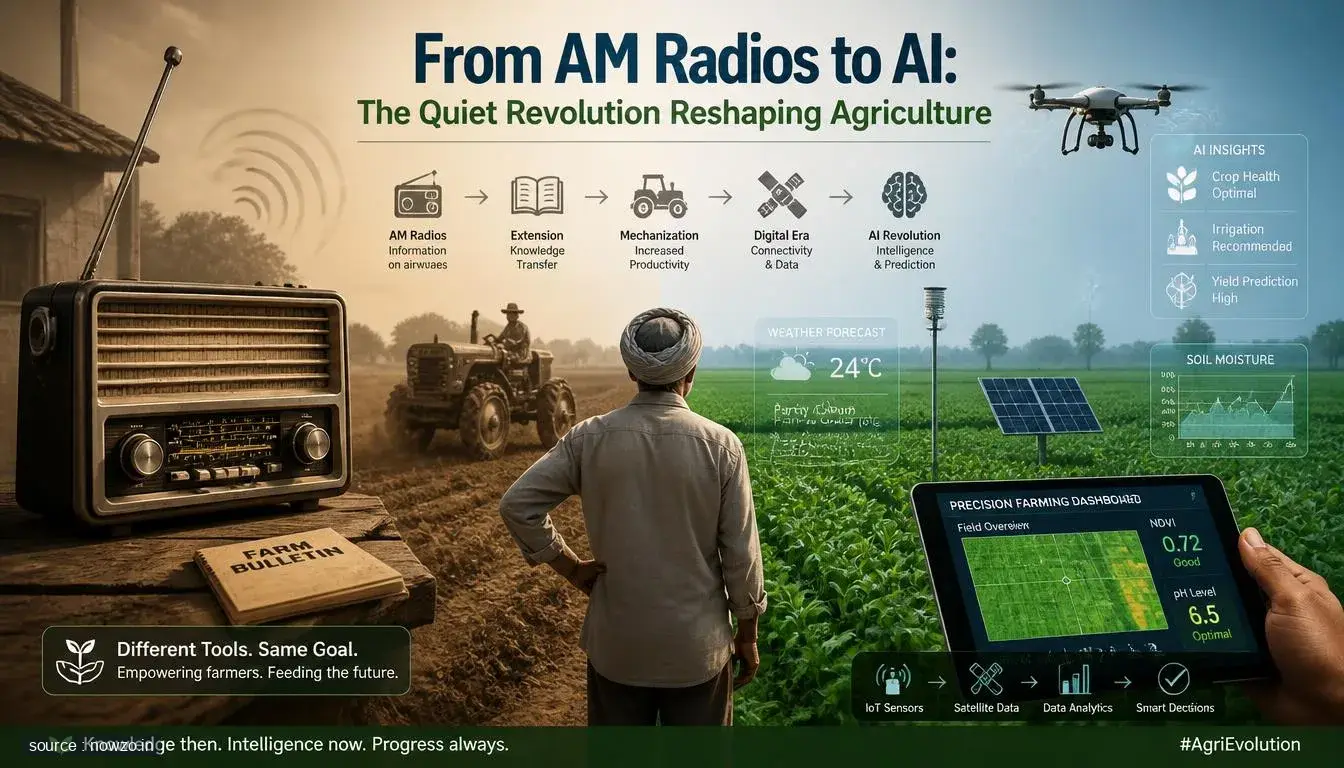
The hum of an AM radio once symbolized cutting-edge farm tech. Today, that static has been replaced by the silent, intelligent whir of drones and autonomous tractors—a transformation decades in the making, reshaping what it means to work the land.
Key facts
- Agriculture technology has evolved from basic tools like AM radios to advanced systems involving AI and autonomy.
- Modern ag tech includes precision farming, drones, autonomous vehicles, and data analytics.
- These technologies aim to increase efficiency, reduce waste, and improve sustainability in farming practices.
A Foundation Built on Simplicity
It started with simplicity. AM radios provided weather updates and market prices—essential, life-saving information delivered through crackling speakers. That was innovation then: accessible, immediate, vital.
The Leap to Precision and Autonomy
Then came GPS. Then sensors. Then machines that didn’t just assist but began to decide. Tractors that drive themselves. Drones that monitor crop health from above. Systems that analyze soil moisture, predict yield, allocate resources—all with minimal human intervention.
Why This Shift Matters Now
It’s not just about doing more with less. It’s about survival. With global food demand rising and climate pressures mounting, technology isn’t a luxury—it’s a lifeline. Farmers aren’t just keeping up; they’re leaning into tools that help them adapt, endure, and even thrive.





Comments