
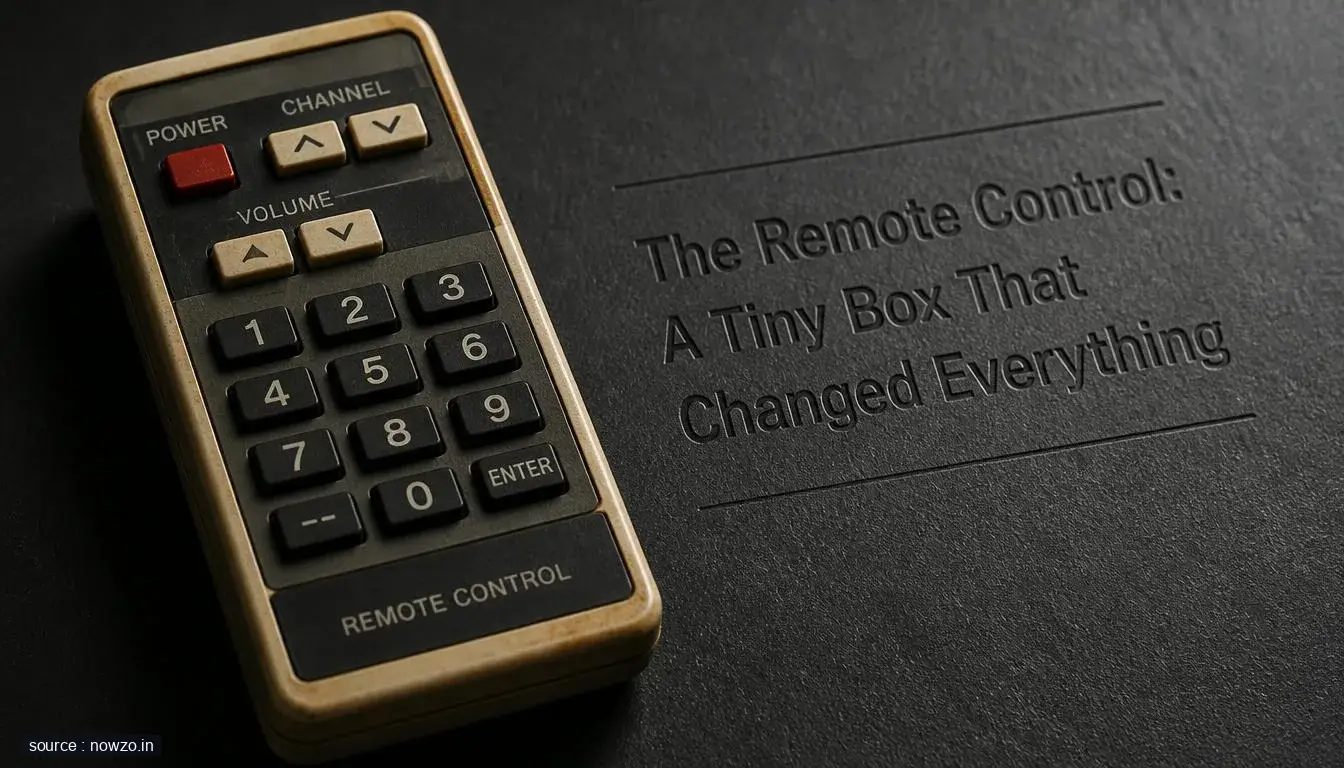
It sits quietly on the coffee table, often lost between cushions, yet it holds a quiet power over our living rooms. The remote control—small, unassuming, but utterly transformative—has redefined how we engage with the world from the comfort of our couches.
Key facts
- Invented to allow channel changing without physical effort
- Evolved from wired to wireless infrared technology
- Became a symbol of convenience and modern living
- Now integrated into smartphones and voice assistants
From novelty to necessity
What started as a luxury quickly became a household staple. The remote eliminated the need to approach the television, granting viewers a new kind of autonomy. Suddenly, flipping through channels, adjusting volume, or pausing a movie required little more than a thumb’s click.
A cultural icon
Beyond its function, the remote took on a life of its own. It represented leisure, control, and even a bit of laziness—a tiny commander of entertainment. Families fought over it; advertisers coveted its attention. It was, in many ways, the first taste of personalized digital command.
What comes next?
Today, remotes are evolving yet again. Smartphones and voice-activated systems are taking over, but the essence remains: effortless control. The original clicker’s legacy lives on in every “Hey Google” and “Alexa,” a testament to our desire for convenience without ever leaving the sofa.



Comments