
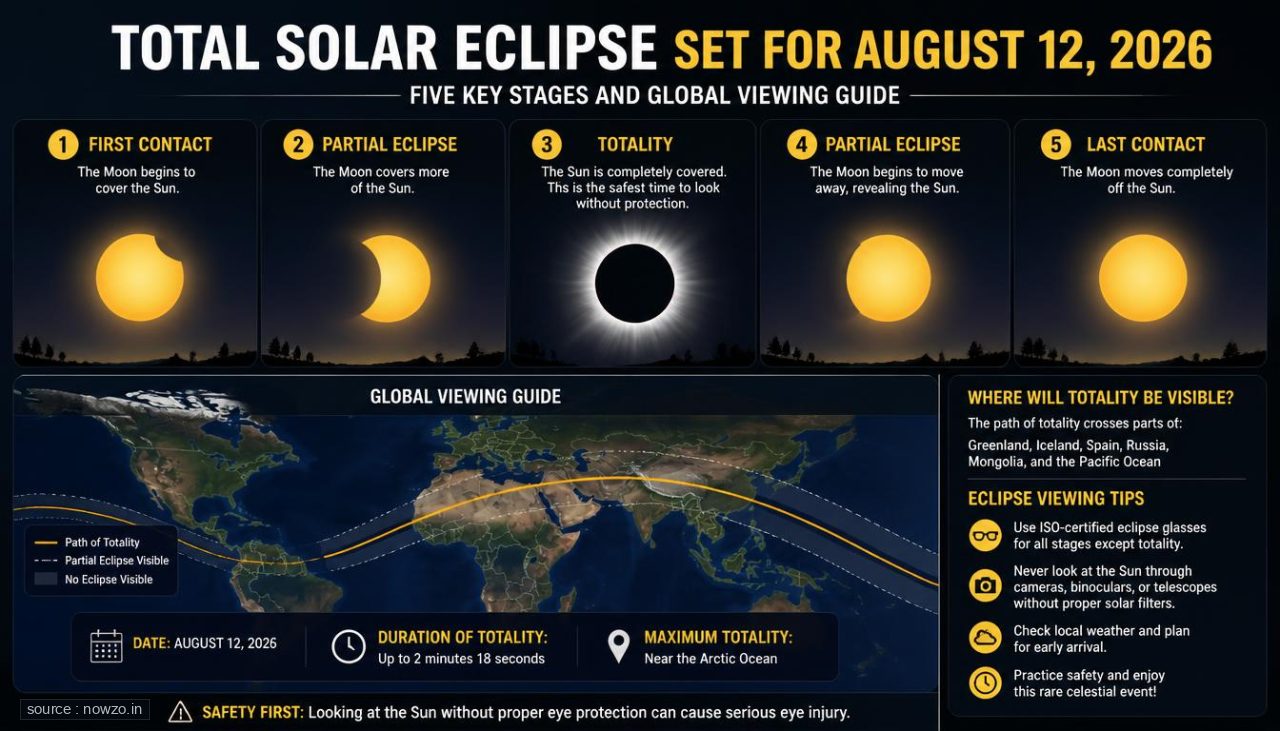
A rare celestial event is drawing international attention as scientists and skywatchers prepare for the upcoming total solar eclipse on August 12. Among the primary research efforts is a specialized NASA high-altitude air mission aimed at gathering rare data during the eclipse's brief moments of totality.
NASA Takes to the Skies for Critical Solar Observations
Researchers operating NASA's airborne mission are preparing to study the sun under unique conditions created by the eclipse. Describing the visceral sensation of intercepting totality from mid-air, mission observers noted that during the flight,
“You’re hit with a slam of shadow.”High-altitude flights allow instruments to capture critical observations above standard atmospheric interference, offering researchers a clearer view of solar dynamics.
Global Interest and Weather Factors Across Europe and the U.S.
The August 12 eclipse has captured widespread interest from eclipse chasers around the world. However, viewing conditions remain a major topic of discussion for observers in Europe and the United States, where local weather patterns could impact ground-level visibility during the 2026 celestial alignment.
Unprecedented Discoveries and Virtual Viewing Options
Astronomers anticipate that scientific instruments targeting the August 12 event will reveal observations never seen before. For those unable to travel to the path of totality, organizations including Sky & Telescope are providing guide options to view the eclipse online through global live streams.



Comments